




The gas diffuser—also known as the gas screen or diverter—is a small but vital consumable in your MIG welding torch. Positioned between the contact tip and the nozzle, it performs two key functions that directly impact weld quality, arc stability, and torch longevity. In WeldSafe Essentials #16, we break down exactly what the gas diffuser does, why it matters, and why you should replace it immediately if missing or damaged.
Primary Functions of the Gas Diffuser
- Gas Rectification and Even Flow
- The diffuser straightens and distributes shielding gas (argon, CO₂, mixes) into a smooth, laminar stream.
- Without it, gas exits turbulently, causing swirling or uneven coverage around the weld pool.
- Result: Poor shielding → oxidation, porosity, inclusions, and other welding defects.
- A properly functioning diffuser ensures consistent gas envelope for clean, defect-free beads.
- Spatter Blocking and Nozzle Protection
- The diffuser acts as a physical barrier, catching most molten spatter before it reaches the nozzle threads or inner surfaces.
- Spatter buildup on the nozzle threads can jam the contact tip, cause short circuits, or burn out the torch head.
- By shielding the nozzle connection (often called the "nozzle joint" or "nozzle seat"), it prevents damage that leads to expensive torch repairs or replacements.
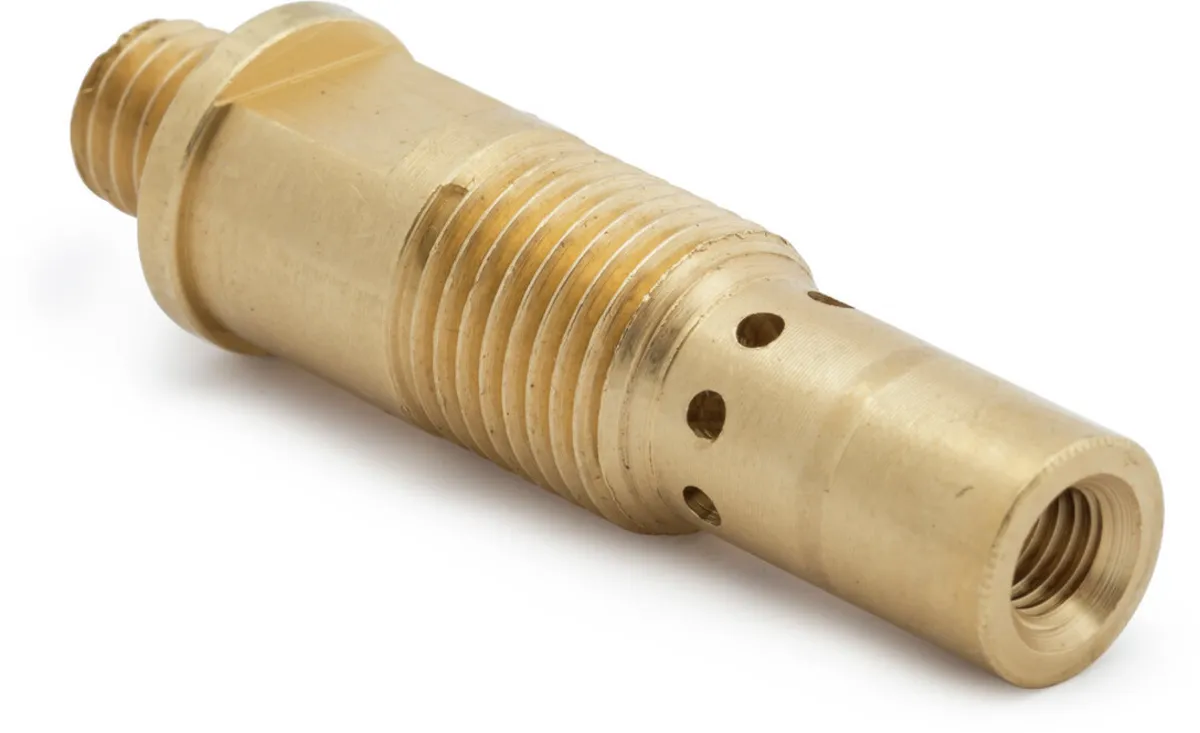
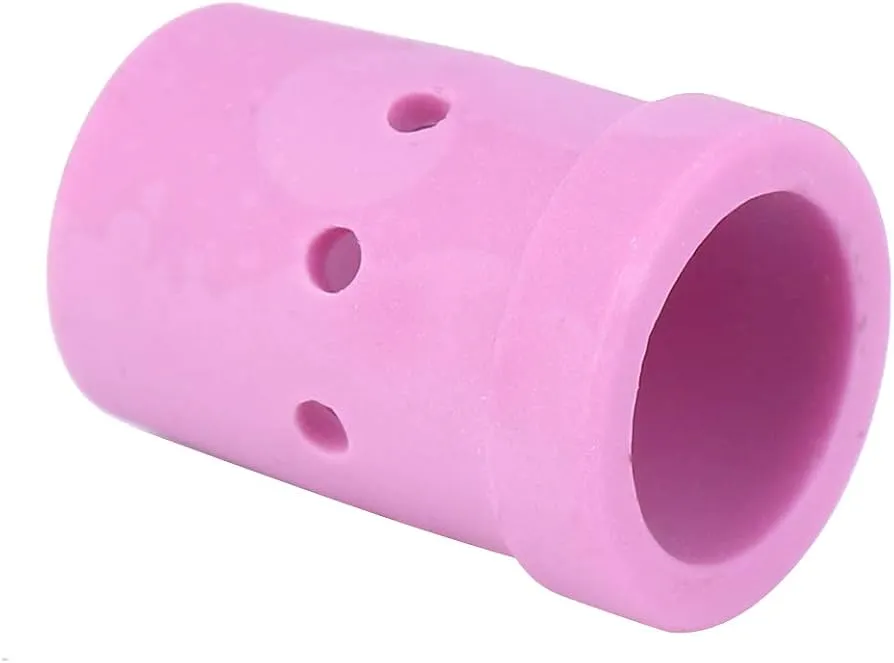
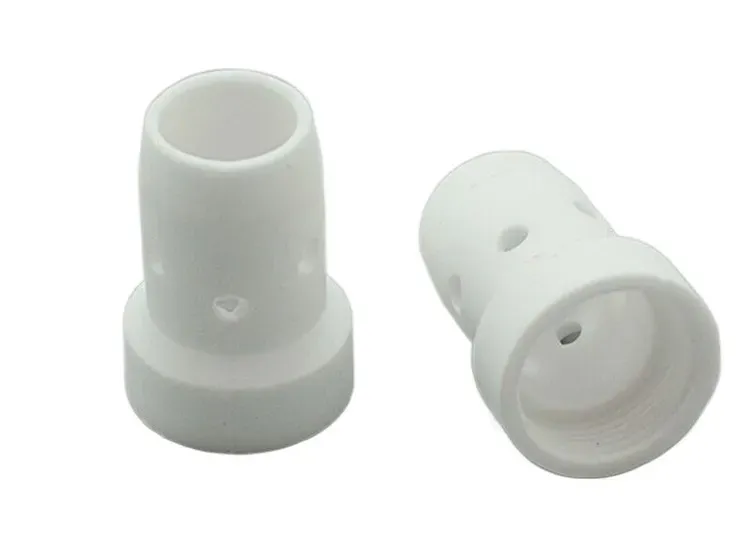
Here are examples of typical gas diffusers in brass and ceramic materials, showing their perforated design for gas distribution and spatter capture:
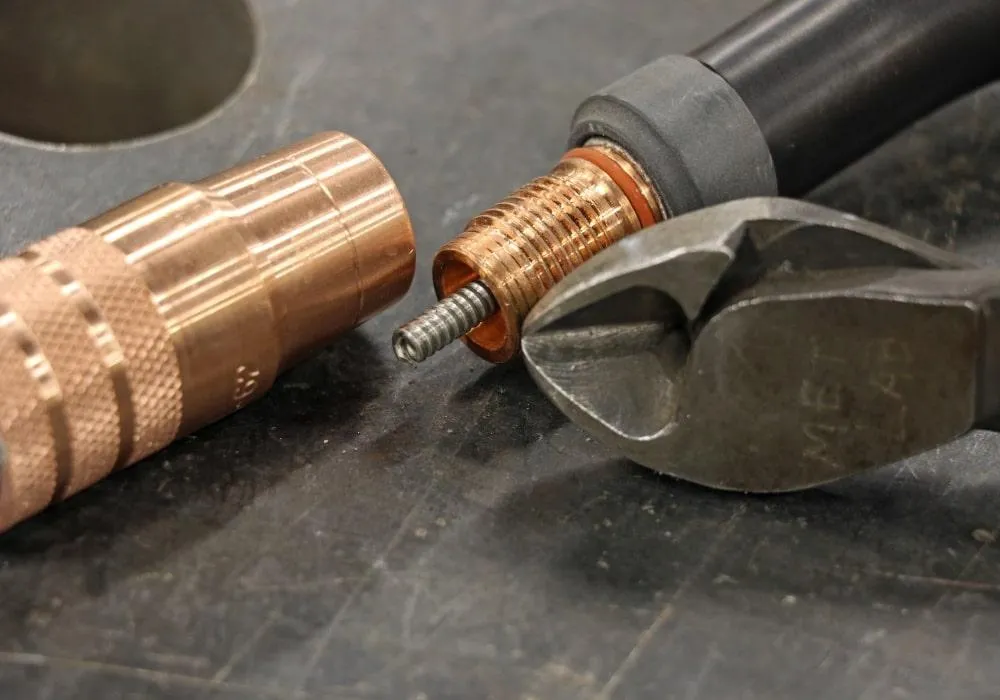
And a close-up of a diffuser installed in the torch assembly, highlighting its position behind the nozzle:
Signs of a Missing or Damaged Diffuser
- Excessive spatter inside the nozzle
- Uneven or turbulent gas flow (visible swirling when purging gas)
- Porosity or oxidation in welds despite correct gas settings
- Spatter buildup on nozzle threads or short-circuiting arcs
- Nozzle threads damaged or contact tip seizing frequently
If any of these appear, stop welding and replace the diffuser immediately—running without one accelerates torch failure.
Replacement Best Practices
- Inspect daily: Remove nozzle and check diffuser for holes, cracks, heavy spatter buildup, or deformation.
- Replace proactively: Change every 1–3 months (or sooner in high-spatter applications) alongside contact tips and nozzles.
- Use the correct type: Match material (brass for standard, ceramic for high-heat) and model to your torch (e.g., Bernard, Binzel, Tweco, etc.).
- Clean before install: Blow out debris from the torch neck to ensure free gas passage.
Quick Checklist
- Diffuser present and securely threaded
- Holes clear of spatter/blockage
- No cracks or melting
- Gas purge test: smooth, even flow without turbulence
- No spatter accumulation on nozzle threads
Conclusion: Small Part, Big Impact
The gas diffuser rectifies gas for smooth shielding, prevents defects, and protects your torch nozzle from spatter damage that could cause short circuits or burn-outs. Never weld without one, and replace it at the first sign of wear—it's a low-cost insurance policy for consistent welds and torch longevity.
Seen a torch ruined by a missing diffuser? Share your experience in the comments.