




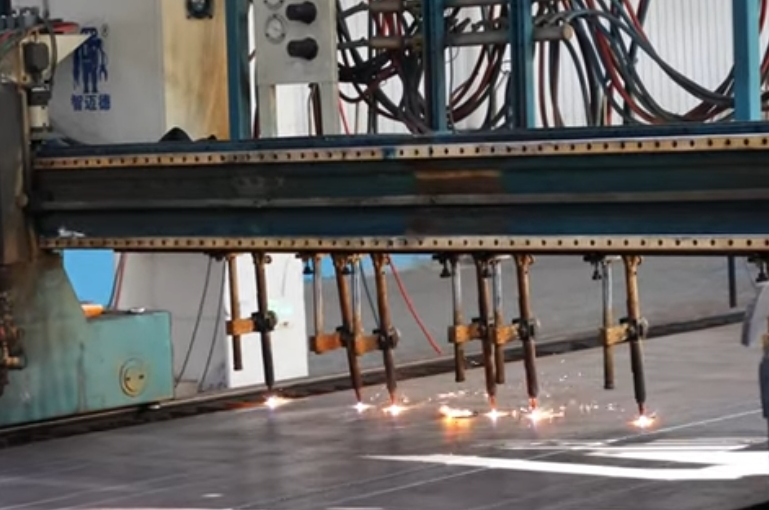
Even with identical current, voltage, and wire feed settings, the final weld bead appearance, penetration, spatter level, and overall quality can vary dramatically depending on your torch angle and travel technique. In WeldSafe Essentials #17, we explore the two main MIG welding methods—forward (push/forehand) and backward (pull/drag/backhand)—including the recommended travel angle range of 0° to 20° and how each affects the weld pool, shielding gas coverage, and bead profile.
Forward vs. Backward Travel: The Basics
- Forward Method (Push / Forehand)
- Torch points forward in the direction of travel.
- Travel angle: Typically 5°–20° forward (torch tilted ahead of perpendicular).
- The arc pushes the molten pool ahead, flattening it out.
- Backward Method (Pull / Drag / Backhand)
- Torch points backward against the direction of travel.
- Travel angle: Typically 5°–20° backward (torch tilted behind perpendicular).
- The arc drags the pool, building a higher, narrower crown.
Here are clear diagrams comparing the two techniques (note the 20° travel angle examples):
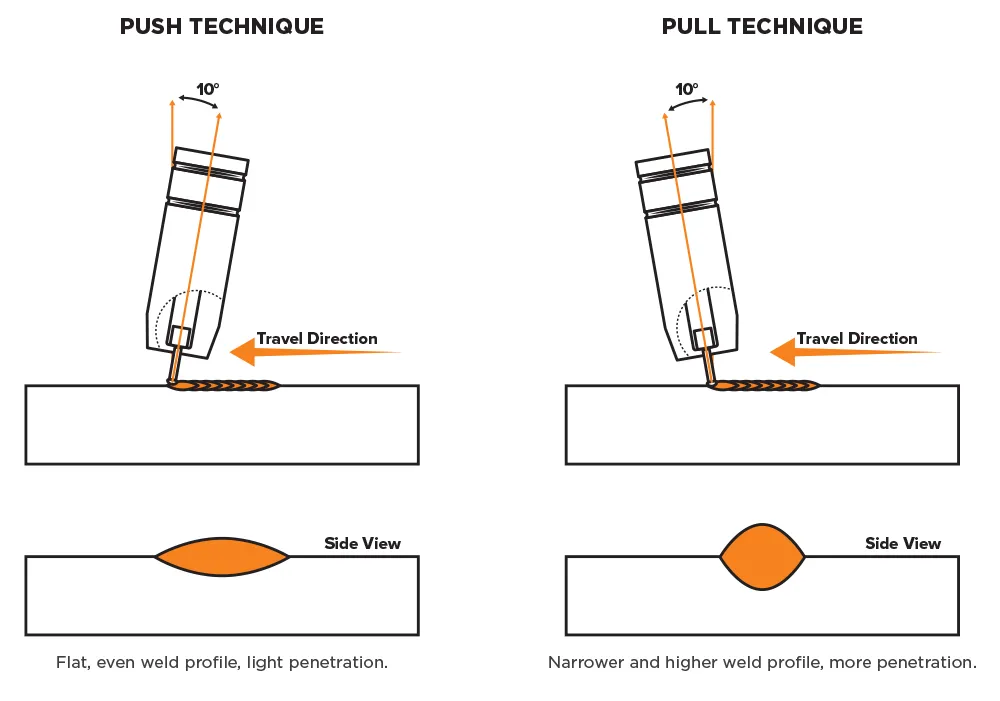
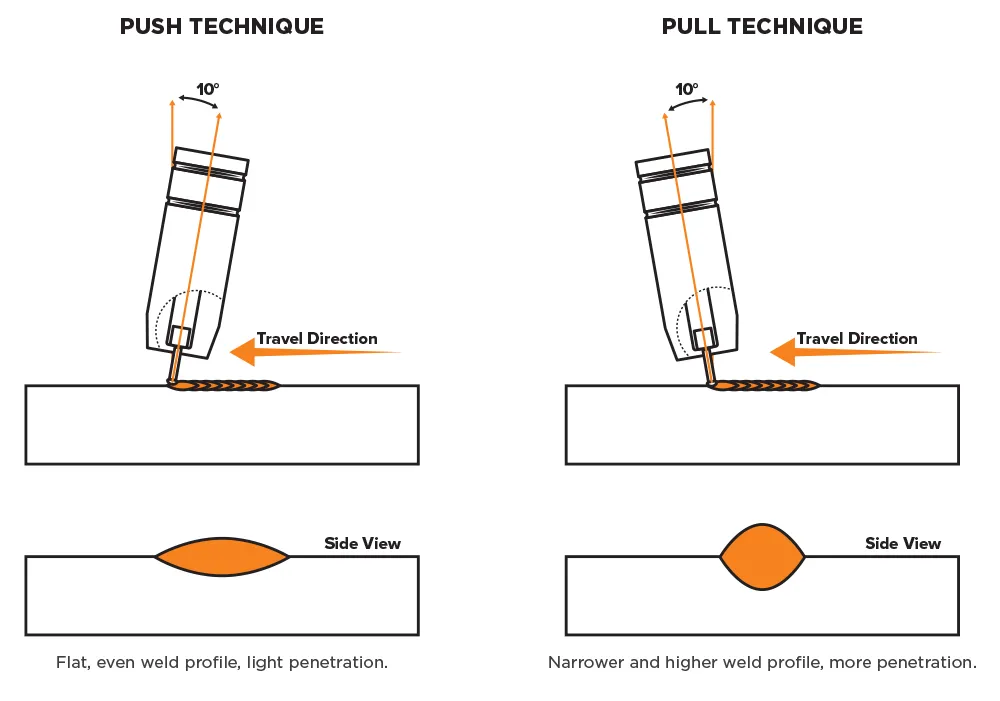
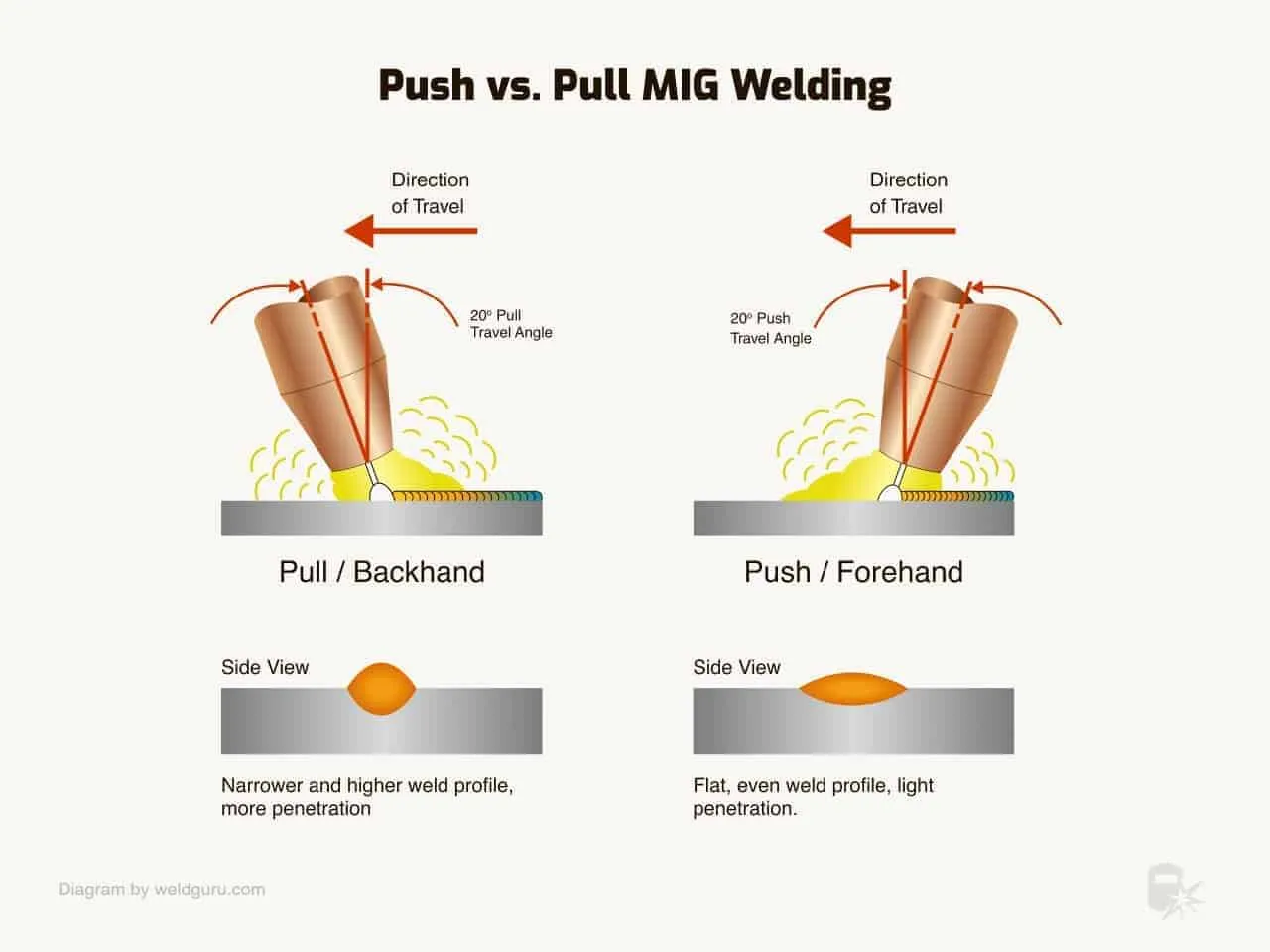
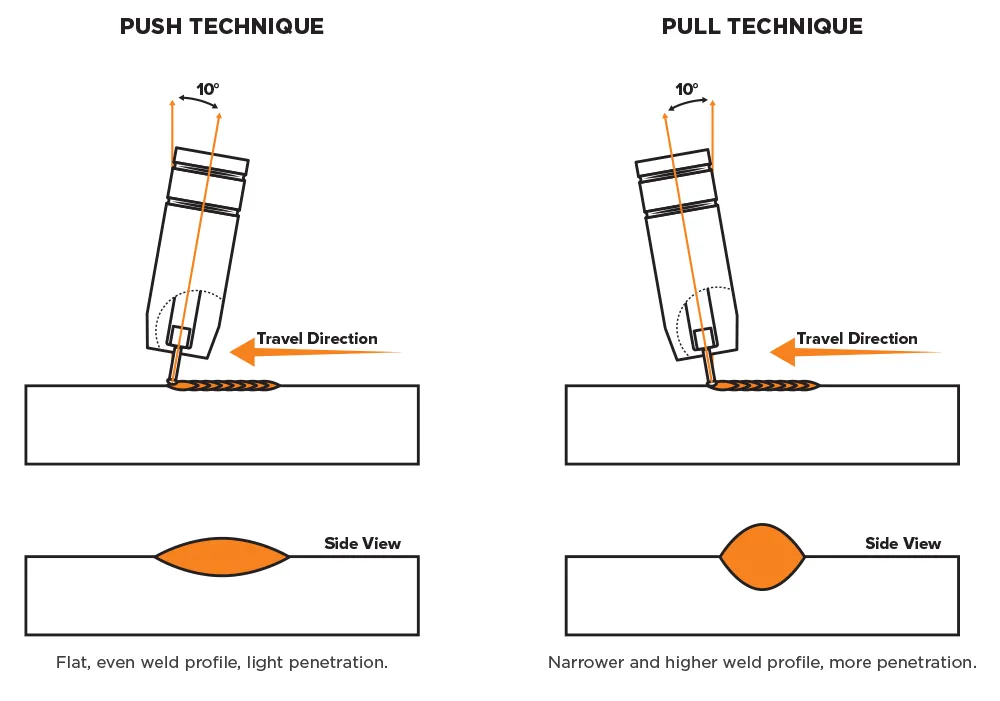
- Push technique generally produces cleaner welds with less spatter and better gas shielding because the gas flows forward over the still-molten pool.
- Pull technique gives deeper penetration but can trap more spatter and cause slight porosity if gas coverage is marginal.
Perpendicular (0°) is acceptable for some flat-position work but often results in average penetration and more spatter than angled techniques.
Practical Guidelines
- Start with 10°–15° angle — Most welders find this the sweet spot for balance between penetration, bead shape, and spatter control.
- Adjust based on material and position —
- Aluminum → Push almost always (better cleaning action and less porosity)
- Steel fillet welds → Pull for deeper root penetration
- Vertical up → Slight push or perpendicular to control puddle
- Maintain consistent angle — Wobbling the torch causes uneven beads and defects.
- Combine with travel speed — Too fast with push = shallow penetration; too slow with pull = excessive buildup.
Quick Pre-Weld Reminder
- Decide push or pull based on desired penetration and finish
- Set travel angle 5°–20° in chosen direction
- Keep torch steady and angle consistent throughout the bead
- Test on scrap first — observe arc stability, spatter, and bead profile
Conclusion: Angle and Direction Control the Outcome
The same machine settings can produce a flat, clean bead or a deep, crowned one simply by changing torch angle and travel direction. Master the 0°–20° range and choose push or pull intentionally—your welds will gain consistency, appearance, and strength.
Which do you prefer—push or pull—and why? Share your go-to technique in the comments.